

3D scanning and reverse engineering can help Perth and WA businesses recreate obsolete or discontinued machine parts. The process turns existing physical components into digital CAD models for review, prototyping, and manufacturing.
When an important machine part breaks and the manufacturer no longer produces it, finding a replacement can become expensive and time-consuming. In some cases, the entire machine may be unusable because of one small discontinued component.
This is where 3D scanning and reverse engineering can provide a practical solution. Instead of searching indefinitely for an obsolete part, an existing physical component can be digitally captured, analysed, and recreated for manufacturing.
At Vertex Manufacturing, 3D scanning can support the reverse engineering process for components that are difficult to source, discontinued, damaged, or no longer available from the original manufacturer.
What Is Reverse Engineering?
Reverse engineering is the process of studying an existing physical object to understand its shape, dimensions, features, and functional design. The information can then be used to create a new digital model of the component.
For machinery and industrial equipment, this can be particularly useful when original CAD files, technical drawings, or manufacturing specifications are unavailable.
The goal is not simply to copy the visible shape of a part. A reverse engineering process can help identify critical dimensions, interfaces, mounting points, and other features required for a replacement component to function correctly.
Using 3D Scanning for Obsolete Part Reverse Engineering in Perth
Traditional measurement methods can involve manually measuring a component with calipers, rulers, gauges, and other equipment. While this can work for simple shapes, complex components can be much more difficult to measure accurately.
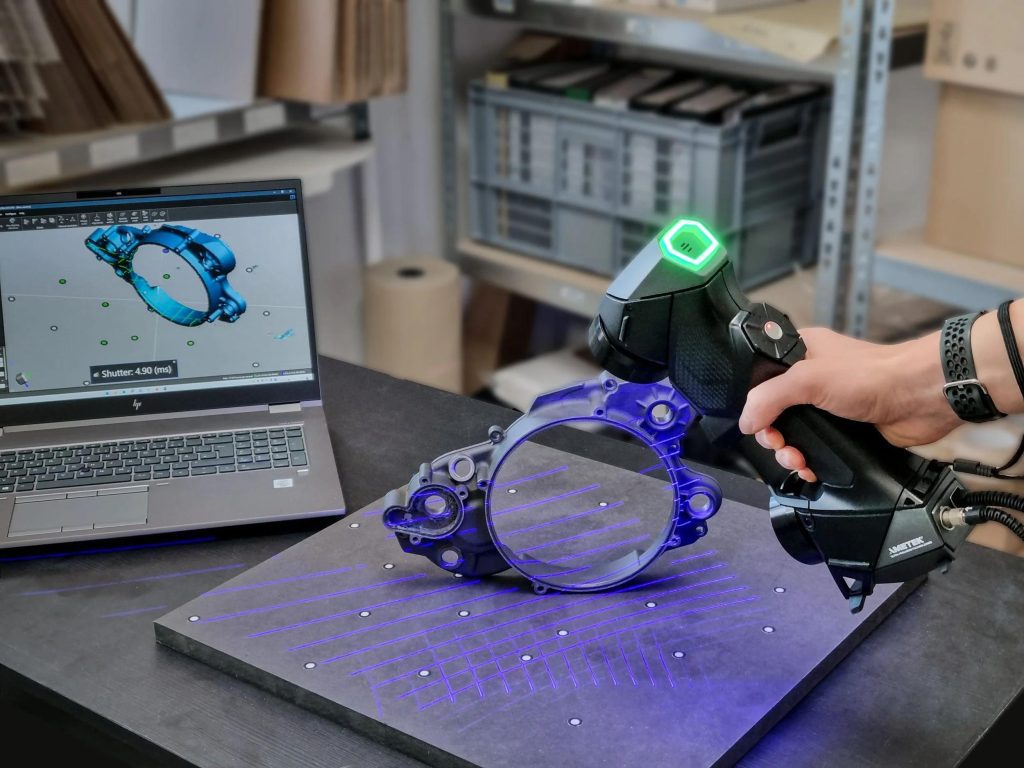
3D scanning captures detailed surface information from a physical object and converts that information into digital data. This provides a starting point for creating a digital representation of the part.
For businesses searching for obsolete part reverse engineering Perth, 3D scanning can be particularly valuable when a replacement component is no longer available through normal suppliers.
Why Discontinued Machine Parts Can Be Difficult to Replace
Many machines remain in operation for years or even decades. However, manufacturers may stop producing spare parts long before the equipment itself is taken out of service.
This creates a common problem for workshops, industrial facilities, mining operations, and other businesses that depend on older machinery.
If you’re looking for a solution for a discontinued or hard-to-source machine part, searching “reverse engineer discontinued machine part WA” may be a useful starting point when:
- The original manufacturer no longer exists
- A replacement part has been discontinued
- Technical drawings are unavailable
- The original CAD file cannot be located
- A replacement has an extremely long lead time
- The part is only available internationally
- Used replacement parts are difficult to find
- The machine cannot operate without the component
Rather than replacing an entire machine because of one unavailable part, reverse engineering may provide another option.
Step 1: Inspecting the Existing Part
The reverse engineering process usually begins by examining the physical component.
The part may be intact, worn, damaged, or partially broken. Even when damage is present, remaining surfaces and features may still provide useful information about the original design.
Important areas may include mounting locations, connecting surfaces, holes, threads, ribs, slots, and functional interfaces.
Understanding how the component fits and works within the larger machine is also important before creating a replacement design.
Step 2: Capturing the Part with 3D Scanning
The physical part is scanned to collect detailed geometric information.
Depending on the component, the scanner captures multiple views that can be combined to create a digital representation of the object’s surface.
This can be especially useful for components with curved surfaces, complex geometry, organic shapes, or details that would be difficult to record accurately through manual measurements alone.
The scan provides a detailed reference, but further engineering work may still be required before the part is ready for manufacturing.
Step 3: Creating a CAD Model
After the physical geometry has been captured, the scan data can be used as a reference for creating a CAD model.
A CAD model provides a cleaner and more usable digital representation of the part. It can include precise features, engineering dimensions, mounting details, and other information required for production.
This stage can also provide an opportunity to review the original component and determine whether any changes are required.
For example, a discontinued part may have failed because of a weak section, repeated wear, or an outdated design feature.
Step 4: Choosing the Right Manufacturing Method
Once the reverse-engineered design is ready, the next step is selecting an appropriate manufacturing process.
The best option will depend on the component’s geometry, material requirements, production quantity, strength requirements, and intended use.
A prototype may first be produced using 3D printing to check the size, fit, and overall design.
For other applications, processes such as injection moulding, CNC machining, metal fabrication, or other manufacturing methods may be more suitable.
Having a digital CAD model can make it easier to assess different manufacturing options before producing the final replacement part.
When Is 3D Scanning the Best Option?
3D scanning can be particularly useful when a component has complex geometry that would take significant time to measure manually.
It can also help when the original part has curves, irregular surfaces, detailed features, or a shape that is difficult to recreate from photographs and basic measurements.
Common examples may include:
- Obsolete machine components
- Discontinued replacement parts
- Custom brackets and housings
- Industrial equipment components
- Automotive and mechanical parts
- Worn components requiring redesign
- Parts without original drawings
- Components requiring digital documentation
- Legacy equipment parts
The condition of the original part can also influence the approach. If a component is heavily worn or damaged, additional engineering judgement may be required to determine the intended original geometry.
A Practical Solution for Legacy Machinery
Legacy machinery can still provide significant value to businesses, particularly when the equipment is reliable and performs a specialised task.
However, sourcing spare parts can become increasingly difficult as machinery gets older.
Reverse engineering can help businesses explore alternatives when a critical component is no longer commercially available.
Instead of relying entirely on old stock, overseas suppliers, or second-hand parts, a physical component can potentially be used as the starting point for a new digital manufacturing workflow.
For Perth and Western Australian businesses, having access to local 3D scanning and reverse engineering services can also simplify communication and inspection of physical components.
From Scan Data to a Replacement Part
The complete process can involve several stages rather than simply placing an object into a scanner and immediately manufacturing a new component.
Physical part → 3D scanning → Scan data → CAD modelling → Design review → Prototype → Manufacturing
Each stage provides an opportunity to check the component and confirm that the replacement design is appropriate for its intended application.
This workflow can also create useful digital documentation for future repairs and manufacturing requirements.
Once a CAD model has been created, the business is no longer dependent solely on one physical sample to understand the component’s geometry.
Reverse Engineering for Perth and WA Businesses
Businesses across Perth and Western Australia may operate equipment that has been in service for many years.
Mining, manufacturing, automotive, engineering, fabrication, and industrial businesses can all encounter situations where an important replacement component is difficult or impossible to purchase.
For searches such as “obsolete part reverse engineering Perth” or “reverse engineer discontinued machine part WA,” the key challenge is usually finding a practical path from an existing physical component to a usable replacement.
3D scanning can be an important part of that process by capturing the geometry of the original component and providing digital data for reverse engineering and CAD development.
Need to Reverse Engineer an Obsolete or Discontinued Part?
If you have a discontinued machine part, obsolete component, or physical object without CAD files or technical drawings, 3D scanning may provide a useful starting point.
The existing part can be assessed to determine how its geometry can be captured and developed into a digital model for further engineering and manufacturing.
For businesses in Perth and across WA, reverse engineering can offer a practical option when sourcing an original replacement part is no longer possible.
Frequently Asked Questions
1. Can you reverse engineer an obsolete machine part in Perth?
Yes. If an original machine part is obsolete or no longer available, the existing component can be assessed and digitally captured using 3D scanning. The scan data can then be used to create a CAD model for reverse engineering, redesign, prototyping, or manufacturing a replacement part.
2. How do you reverse engineer a discontinued machine part in WA?
The process usually starts with inspecting the existing part and capturing its physical geometry through 3D scanning and detailed measurements. This information can then be used to develop a CAD model and prepare the component for prototyping or manufacturing.
3. Can a damaged or worn machine part be reverse engineered?
In many cases, yes. Even if a part is worn, damaged, or partially broken, the remaining geometry can provide valuable information. Additional measurements and engineering analysis may be used to recreate the intended shape and functional features of the original component.
4. Why use 3D scanning for obsolete part reverse engineering?
3D scanning can capture complex shapes, curves, and detailed surfaces that may be difficult to measure manually. It provides digital data that can be used as a reference when creating an accurate CAD model for reverse engineering and replacement part manufacturing.
5. Can Vertex Manufacturing help recreate a discontinued or hard-to-source part?
Vertex Manufacturing can assist with 3D scanning, CAD modelling, and the reverse engineering process for obsolete, discontinued, and difficult-to-source components. Once a digital model has been developed, suitable prototyping and manufacturing options can be considered based on the part’s application and requirements.


